Earthboat
Date: December 2022 - Location: Across Japan Area: 20.5m2 Function: Mobile cabin, Hotel Status: Built Structural engineer: ARSTR Contractor: TIC Plan Client: Earthboat Recognition: Good Design Award 2024; CLT of the Year Award 2026 Photo: Yuta Sawamura & Earthboat
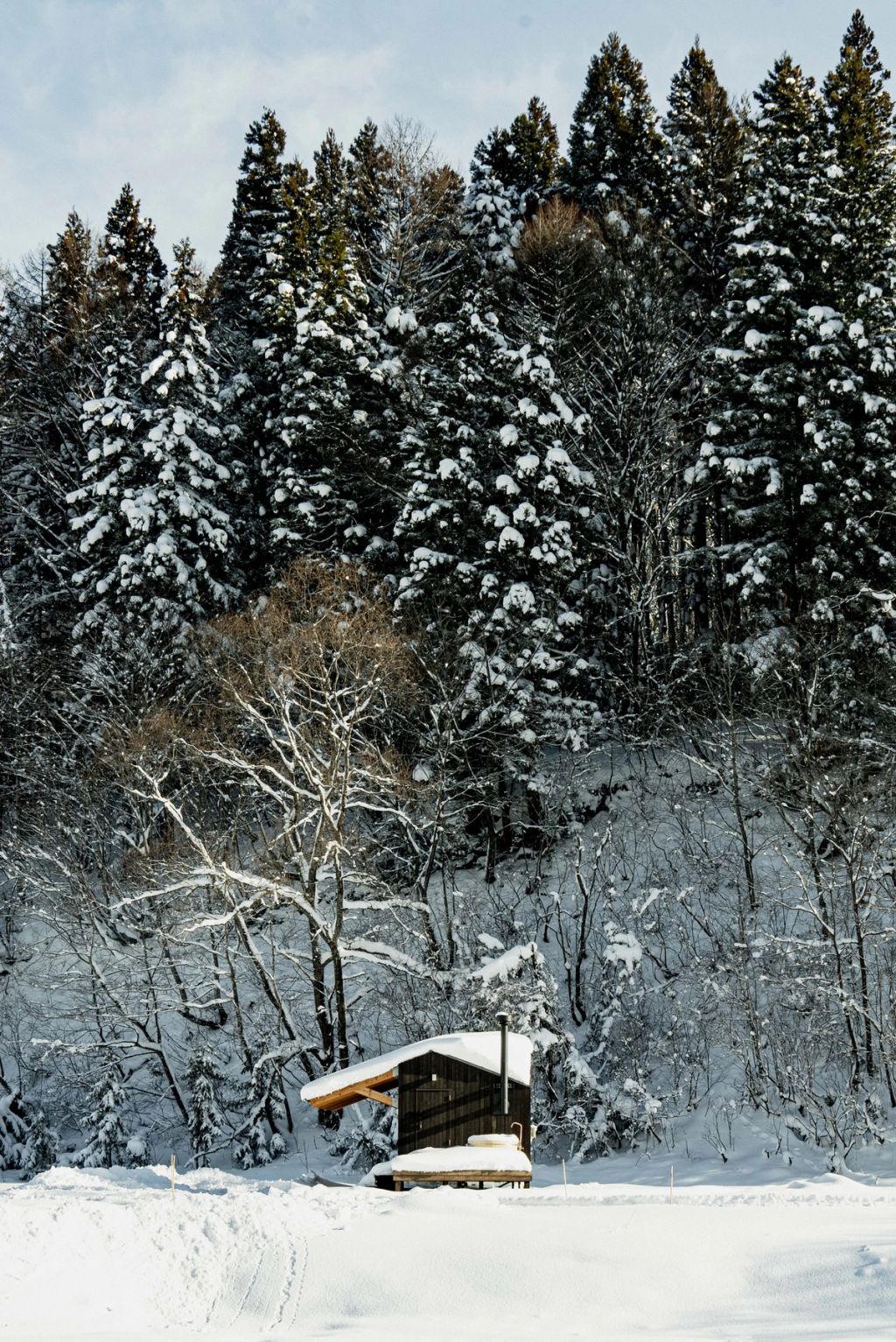
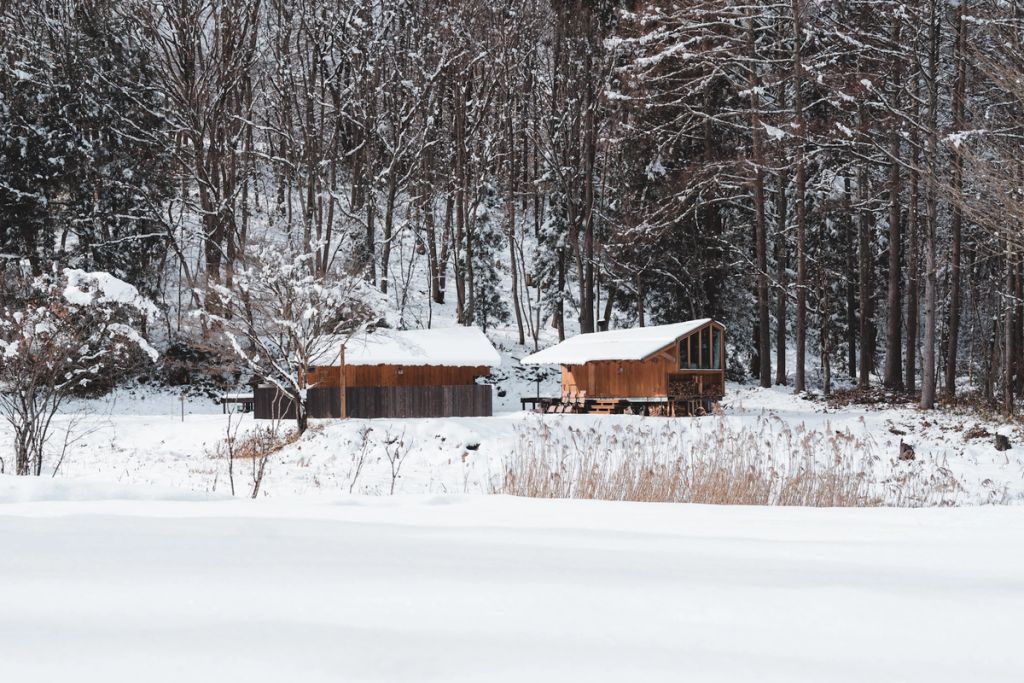
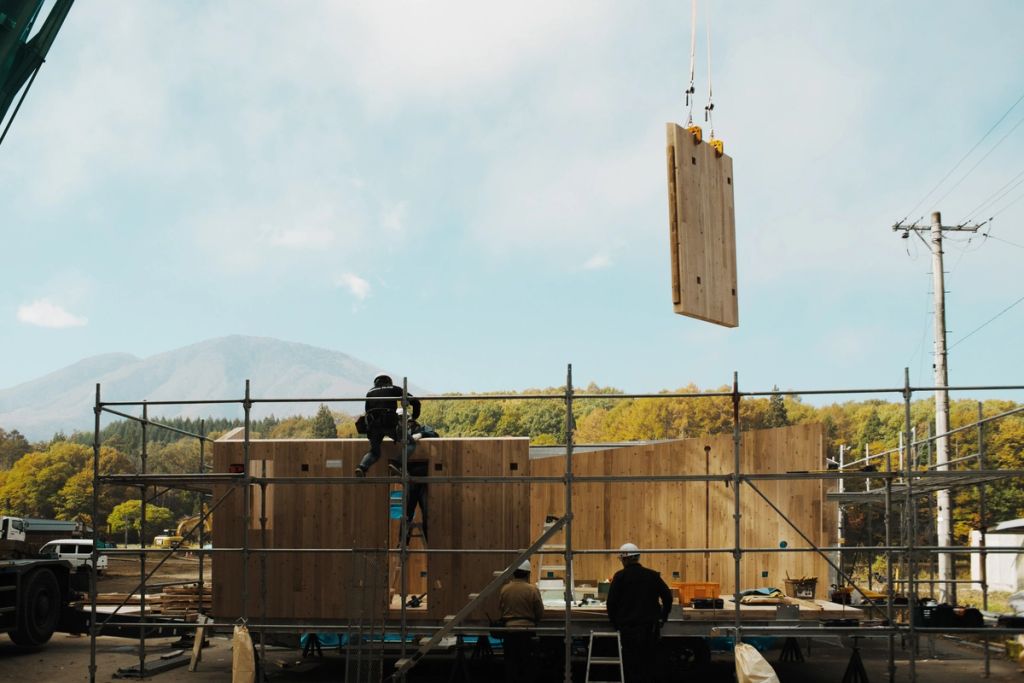
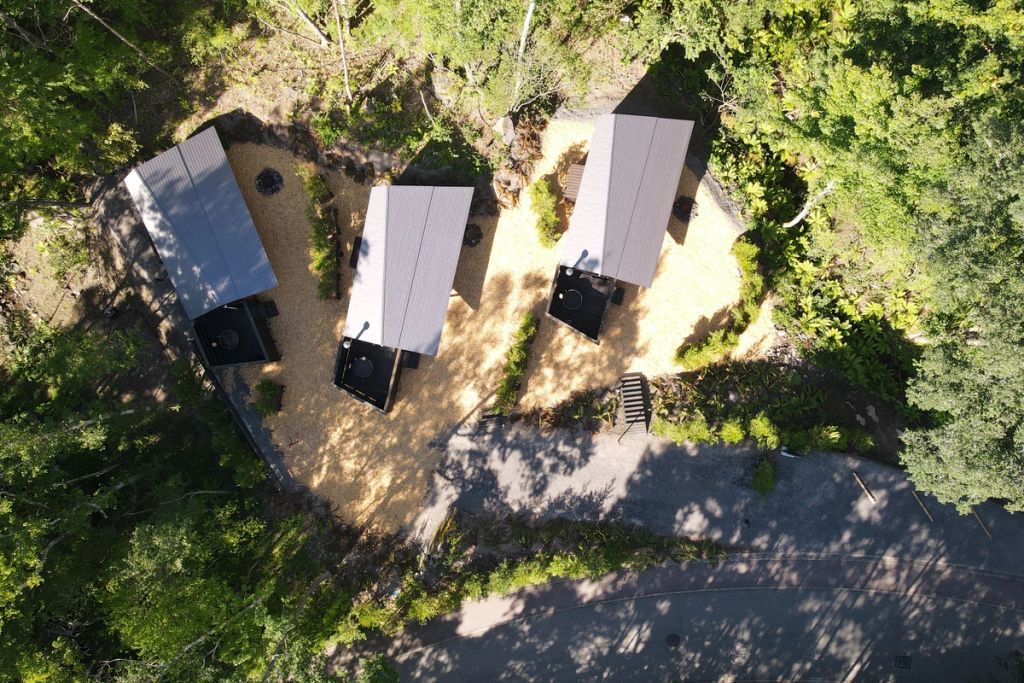
Earthboat is a mobile cabin made from Japanese cedar CLT, designed to reconnect people with rural landscapes left behind by Japan’s economic boom. Since the first unit was completed in December 2022, more than 100 cabins have been built across Japan. Each cabin is prefabricated near Tokyo and delivered to site whole. Assembled only with timber and metal joints, it can be installed within a single day without foundations, then dismantled or relocated, leaving no permanent mark. By bringing city dwellers back into contact with nature, Earthboat reopens overlooked sites and sets new cycles of use, care and renewal in motion. The series received the Good Design Award in 2024 and the CLT of the Year Award in 2026.
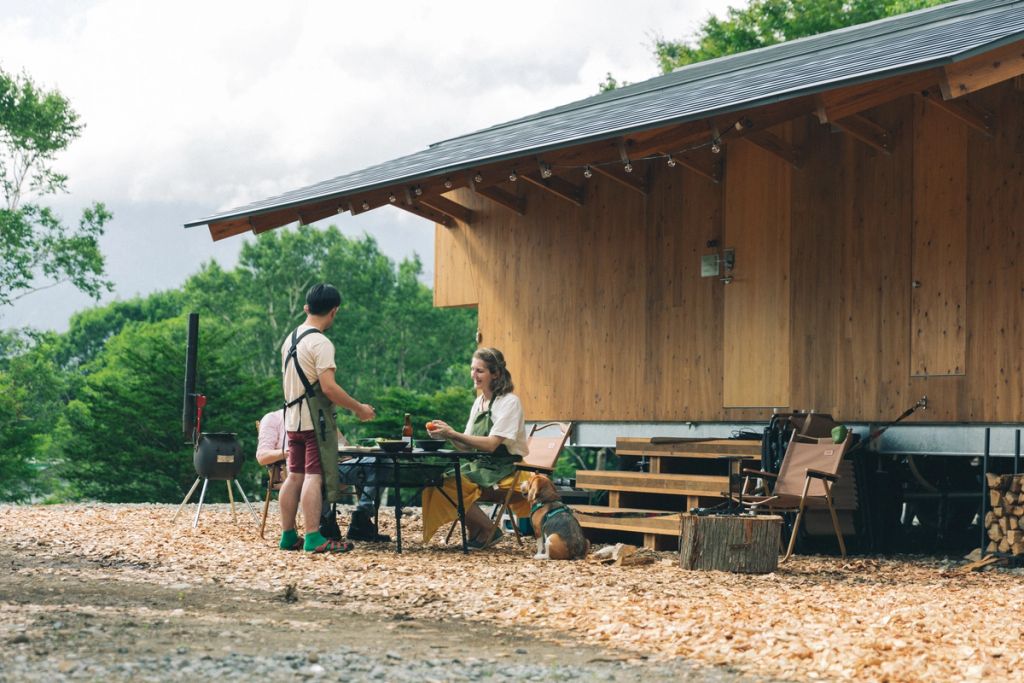
The project grew from the client’s childhood in Nagano’s mountains, where ski resorts and leisure facilities built during Japan’s late twentieth-century economic boom have gradually declined. Many of these sites now remain as visible but underused fragments of the landscape. From the outset, the ambition was not to add further permanent infrastructure, but to find a lighter way to reinhabit these places, learning from earlier developments. This led to the brief for Earthboat: small, adaptable accommodation that can move, sit quietly in its surroundings and leave no permanent mark. The proposal needed to balance mobility, repeatability and restraint, so that it could be deployed across many sites, remain open to change over time and never become a burden on the places it occupies. Each cabin is built from Japanese cedar CLT, prefabricated near Tokyo and delivered to site whole. Assembled only with timber and metal joints, it can be installed within a single day without foundations, then dismantled or relocated. Close collaboration between designers, manufacturers and contractors has allowed each unit to inform the next, and more than 100 cabins have now been built. While CLT in Japan is usually associated with large public buildings, Earthboat adapts it to a compact, robust, repeatable format for dispersed rural sites. The architectural expression is deliberately restrained. Outside, the cabin takes a simple, familiar form that sits quietly in its setting. Inside, a large opening frames the landscape, establishing a direct relationship between interior and surroundings, and exposed CLT surfaces create a warm, tactile atmosphere. A compact sauna in each unit allows year-round use and warms the mass of the timber in colder seasons. The construction minimises non-organic materials and uses no conventional insulation; thermal comfort comes from the solid timber itself. At the end of its use, each cabin can be moved on rather than left behind, avoiding the long-term waste that earlier developments produced. Earthboat breathes new life into abandoned landscapes, places left behind as by-products of the economic boom. Deployed across many rural regions, each cabin adapts to its own site while sharing a common architectural language. City dwellers can reach nature through an experience that is shared yet specific to each place, and distant locations become linked through a single way of building. In this way, Earthboat reopens these overlooked sites and sets new cycles of use, care and renewal in motion. The series received the Good Design Award in 2024 and the CLT of the Year Award in 2026.